Research
The 4 percent rule, and what it really says
Multiply your yearly spending by 25 and you have a first estimate of your freedom number. Here is where the rule came from, and its limits.

In 1994 a financial planner named William Bengen asked a simple question: how much can a retiree withdraw each year, raised with inflation, without running out of money in 30 years, even in the worst periods in US history?
His answer was about 4 percent of the starting balance. A 1998 study by three professors at Trinity University reached a similar result, and the "4 percent rule" was born.
How it works
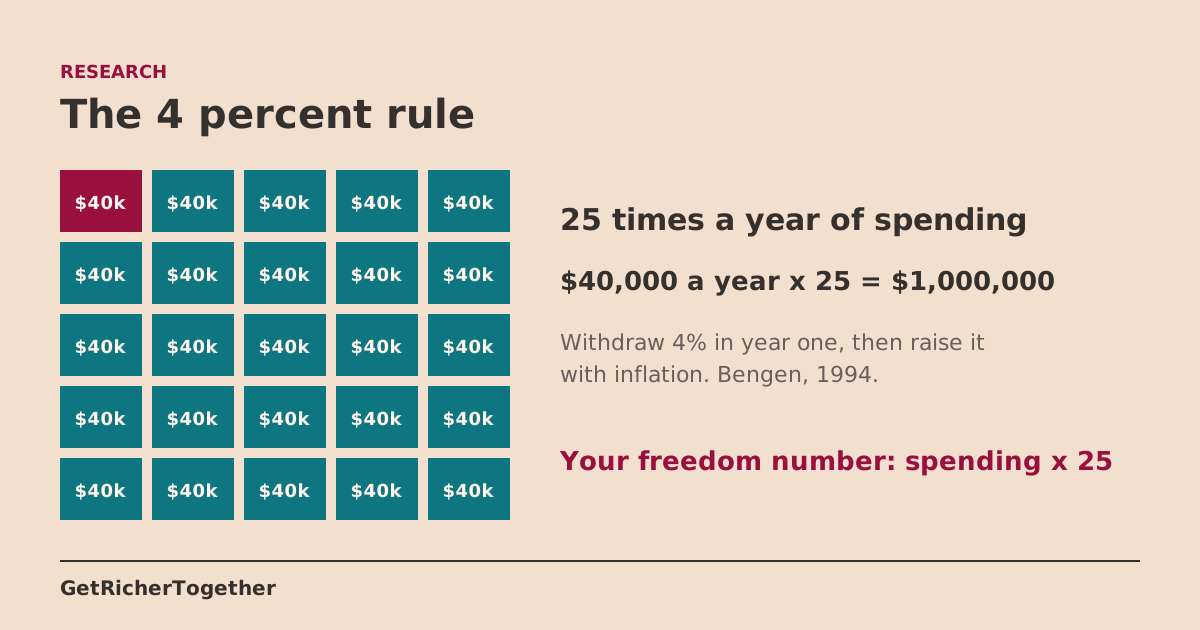
- In your first year, withdraw 4 percent: $40,000 from $1,000,000.
- Each year after, raise that dollar amount by inflation, whatever the market did.
- In the historical data, a mix of stocks and bonds lasted 30 years even for people who retired just before the worst markets, including 1929 and the late 1960s.
Turned around, it gives the freedom number: your yearly spending times 25.
| Yearly spending | Freedom number |
|---|---|
| $40,000 | $1,000,000 |
| $60,000 | $1,500,000 |
| $80,000 | $2,000,000 |
Social Security or a pension lowers the number: only count the spending your investments must cover. Try it in the freedom number calculator.
What it does not say
- It is not a guarantee. It is based on one country's past. Future returns may be lower.
- It assumes 30 years. Retire at 45 and you may need 50 years; many planners use 3 to 3.5 percent for long retirements. US review
- It ignores flexibility. Real people spend less in bad years. Being willing to cut 10 percent in a down market makes a higher starting rate safer.
- It ignores fees. A 1 percent yearly fee takes a quarter of a 4 percent withdrawal.
How we use it
As a target, not a promise. It tells you roughly how far up the Wealth Ladder you need to climb before work becomes optional, and the Money Path tells you how to keep the money you will spend soonest out of the market's swings.