Invest
The 401(k) match is the best return you will ever get
An employer match turns every dollar you put in into a dollar and a half, or two, on day one. No fund in the world beats that.

If your employer offers a 401(k) match and you are not taking all of it, you are turning down part of your pay. It is the one investing decision where the answer is almost always yes.
How a match works
A common formula is 50 cents for every dollar you contribute, on up to 6 percent of your salary. Some employers match dollar for dollar; some add a flat percentage whether you contribute or not. Your plan's summary plan description has the exact rule.
Take a salary of $60,000 and that common formula:
| Per year | Per month | |
|---|---|---|
| You put in 6% | $3,600 | $300 |
| Your employer adds | $1,800 | $150 |
| Total going in | $5,400 | $450 |
That is a 50 percent return before your money is invested in anything.
What it adds up to
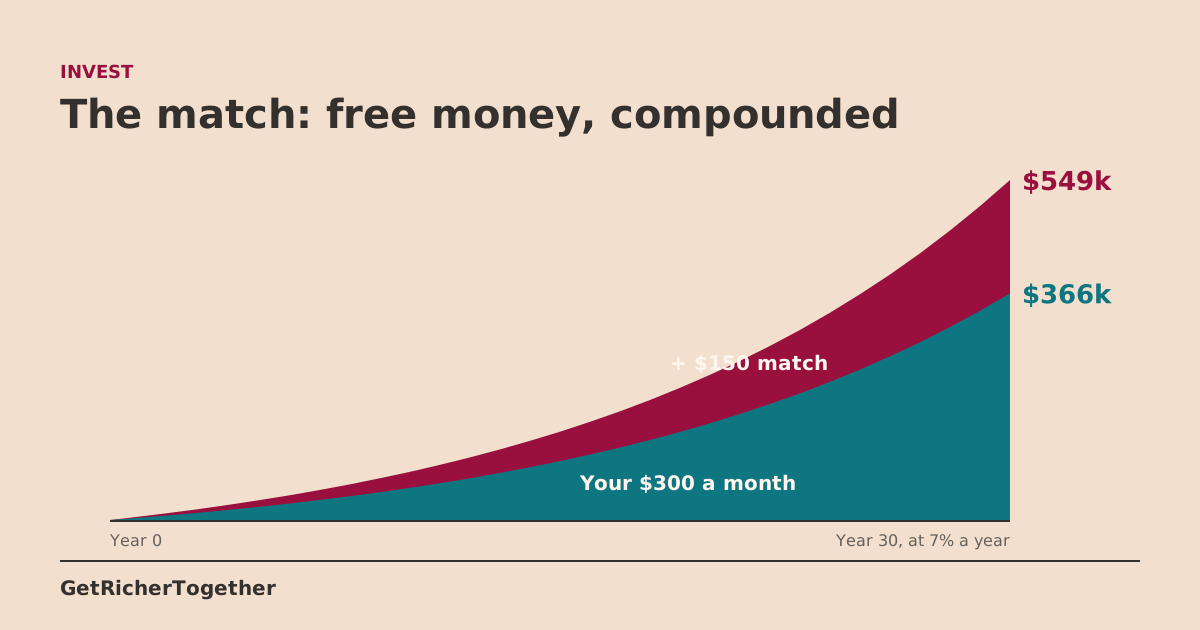
Invested for 30 years at 7 percent a year, your $300 a month grows to about $366,000. With the match it grows to about $549,000. The match alone is worth about $183,000.
7 percent is an assumption for illustration, not a promise. Try your own numbers in the compound growth calculator.
Three things to check
- Vesting. Your own contributions are always yours. The employer's part may vest over several years, so leaving early can forfeit some of it. Know your schedule before you change jobs.
- The default rate. Many plans enroll you automatically at 3 percent. If the match goes to 6 percent, the default leaves money on the table.
- The fund. Pick the cheapest broad index fund or target date fund in the plan. Fees compound too; see Invest simply.
Before or after paying off debt?
Take the match first, even with credit card debt. A 50 percent instant return beats paying off a 25 percent card. Above the match, pay the expensive debt, then come back and raise your contribution. The yearly limit for employee contributions is set by the IRS and changes most years. US review